
Slag Blocking Machine: An Indispensable Equipment for Improving Molten Steel Quality in Metallurgy
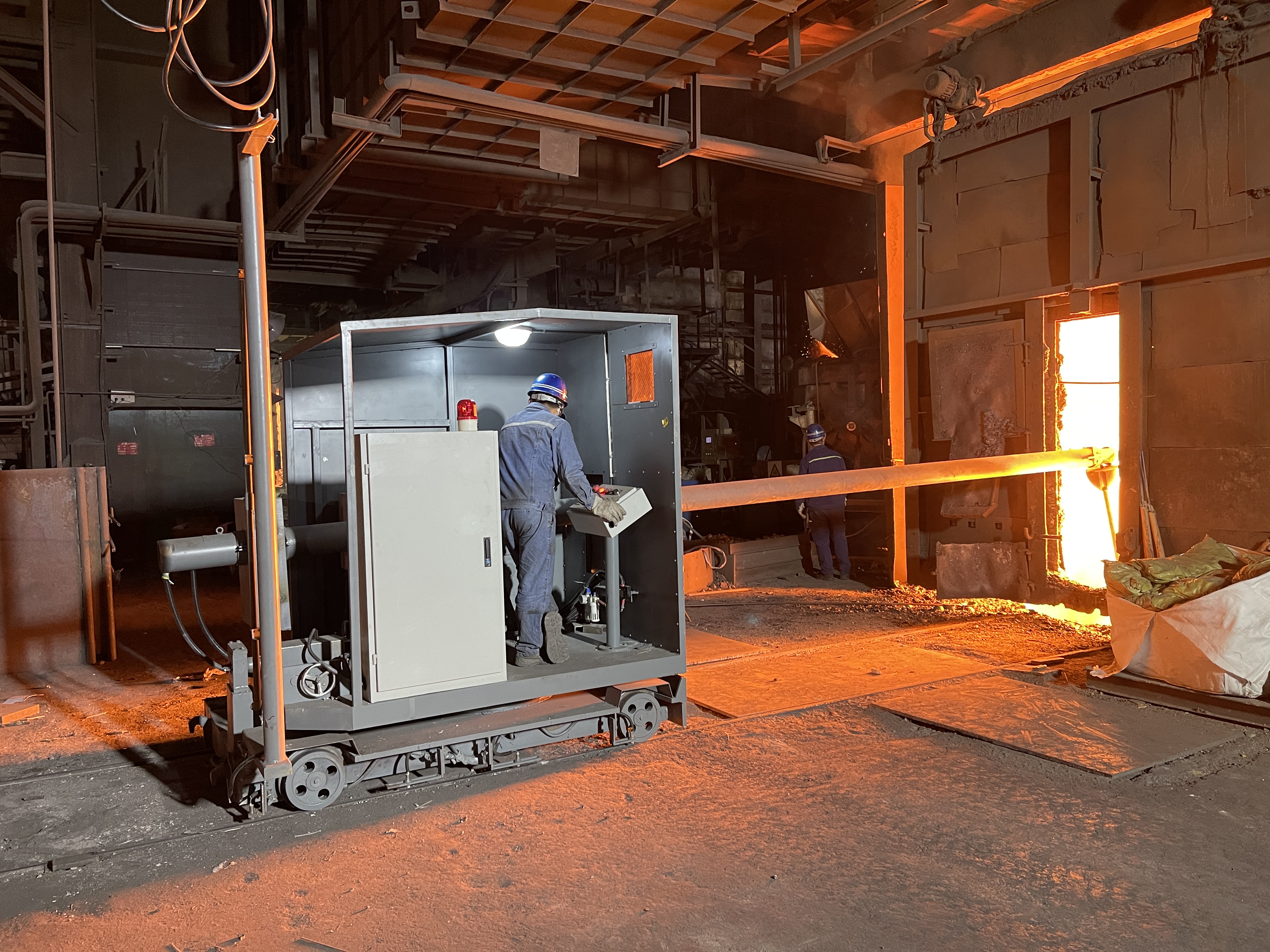
1.1 Detection and Positioning Stage
Before the tapping operation starts, the slag blocking machine first needs to obtain accurate information about the furnace mouth position, the liquid level of molten steel in the furnace, and the initial state of slag. This stage mainly relies on advanced detection technologies. For example, some slag blocking machines are equipped with infrared temperature sensors and visual recognition systems. The infrared sensors can detect the temperature distribution around the furnace mouth to distinguish the high - temperature molten steel area from the relatively low - temperature slag area; the visual recognition system uses high - temperature - resistant cameras to capture real - time images of the furnace mouth, and through image processing algorithms, it can accurately identify the boundary between molten steel and slag. In addition, some intelligent slag blocking machines also integrate weight sensors on the furnace body. By monitoring the weight change of the furnace during the smelting process, they can roughly estimate the amount of molten steel and slag, providing a data basis for the subsequent slag blocking operation.
1.2 Slag Blocking Execution Stage
When the tapping operation begins, the molten steel flows out of the furnace mouth into the ladle under the action of gravity. At this stage, the slag blocking machine starts the slag blocking execution according to the pre - set parameters and the real - time data obtained by the detection system. Taking the common mechanical slag blocking machine as an example, its execution mechanism is usually a telescopic baffle or a rotating slag blocking rod. When the detection system judges that the slag is about to flow out of the furnace mouth (usually when the molten steel tapping amount reaches 80% - 90% of the total amount), the control system sends a signal to drive the hydraulic or pneumatic device, pushing the baffle or slag blocking rod to extend into the furnace mouth. The baffle or rod is made of high - temperature - resistant materials (such as high - alumina refractory materials or heat - resistant steel alloys) that can withstand the high temperature of molten steel (above 1600℃) without being melted or deformed. The baffle blocks the slag at the furnace mouth by physical blocking, while the slag blocking rod can stir the slag at the furnace mouth to change the flow direction of the slag, preventing it from following the molten steel into the ladle. For the electromagnetic slag blocking machine, the execution principle is different. It generates a strong magnetic field around the furnace mouth through an electromagnetic coil. When the molten steel and slag flow through the magnetic field area, the molten steel (a good conductor of electricity) is affected by the electromagnetic force, and its flow direction is adjusted. The slag (a poor conductor of electricity) is not affected by the electromagnetic force, so it is separated from the molten steel and stays at the furnace mouth.
2. Main Types of Slag Blocking Machines in Metallurgy
According to the different working principles and structural forms, slag blocking machines in the metallurgical industry can be mainly divided into three categories: mechanical slag blocking machines, electromagnetic slag blocking machines, and pneumatic slag blocking machines. Each type has its own unique characteristics and applicable scenarios.
2.1.1 Baffle - Type Mechanical Slag Blocking Machines
The core component of this type of slag blocking machine is a rectangular or arc - shaped baffle made of high - temperature - resistant refractory materials. The baffle is connected to a telescopic arm, and the telescopic arm is driven by a hydraulic cylinder or a motor. During the tapping process, when the slag is about to flow out, the hydraulic cylinder or motor drives the telescopic arm to push the baffle into the furnace mouth. The baffle covers the lower part of the furnace mouth (the area where the molten steel flows out), and the slag is blocked by the baffle and cannot flow out. After the tapping is completed, the telescopic arm retracts, and the baffle returns to the original position. Baffle - type mechanical slag blocking machines have the advantages of simple structure, low cost, and easy maintenance. They are suitable for small and medium - sized converters or electric furnaces with a tapping mouth diameter of less than 300mm. However, their disadvantage is that the baffle is easily worn or damaged due to direct contact with high - temperature molten steel and slag, requiring regular replacement of the baffle, which increases the maintenance workload.
2.1.2 Rod - Type Mechanical Slag Blocking Machines
This type of slag blocking machine uses a long, thin slag blocking rod (usually with a diameter of 50 - 100mm and a length of 1 - 2m) as the execution component. The slag blocking rod is made of heat - resistant steel alloy or composite refractory materials. It is installed on a rotating mechanism, and the rotating mechanism is driven by a reducer and a motor. During the tapping process, the rotating mechanism drives the slag blocking rod to rotate into the furnace mouth, and the rod is inserted into the interface between molten steel and slag. By rotating the rod, it can stir the slag, destroy the flow state of the slag, and prevent the slag from flowing into the ladle with the molten steel. Compared with the baffle - type, the rod - type mechanical slag blocking machine has a smaller contact area with molten steel and slag, so the wear of the slag blocking rod is less, and the service life is longer. It is suitable for large - sized converters with a tapping mouth diameter of more than 300mm. However, its slag blocking effect is slightly affected by the skill level of the operator (the timing and depth of inserting the rod need to be controlled accurately), and the structure of the rotating mechanism is more complex than that of the telescopic arm, requiring more precise maintenance.
2.2 Electromagnetic Slag Blocking Machines
Electromagnetic slag blocking machines are a kind of advanced slag blocking equipment developed in recent years. They use the principle of electromagnetic induction to separate molten steel and slag without direct contact with the high - temperature medium, so they have the advantages of long service life and stable slag blocking effect. The main components of this type of slag blocking machine include an electromagnetic coil, a magnetic core, a cooling system, and a control cabinet. The electromagnetic coil is made of copper tubes with good electrical conductivity, and the magnetic core is made of silicon steel sheets with high magnetic permeability. The cooling system (usually water cooling) is used to cool the electromagnetic coil to prevent it from being burned due to high temperature during operation. During the tapping process, the electromagnetic coil is energized by the control cabinet to generate a strong alternating magnetic field. When the molten steel flows through the magnetic field area, it cuts the magnetic induction line and generates an induced current. The induced current interacts with the magnetic field to generate an electromagnetic force. The direction of the electromagnetic force is opposite to the flow direction of the molten steel, which slows down the flow speed of the molten steel. At the same time, the slag (a non - conductor or poor conductor) is not affected by the electromagnetic force, so it remains at the furnace mouth under the action of inertia and gravity. In this way, the separation of molten steel and slag is realized. Electromagnetic slag blocking machines are suitable for large - scale converters and electric furnaces with high production efficiency and strict requirements on molten steel quality (such as stainless steel and high - alloy steel production). However, their disadvantages are high initial investment cost (the manufacturing cost of the electromagnetic coil and control system is high) and large energy consumption (a large amount of electricity is required to generate a strong magnetic field), so they are not widely used in small and medium - sized metallurgical enterprises.
2.3 Pneumatic Slag Blocking Machines


