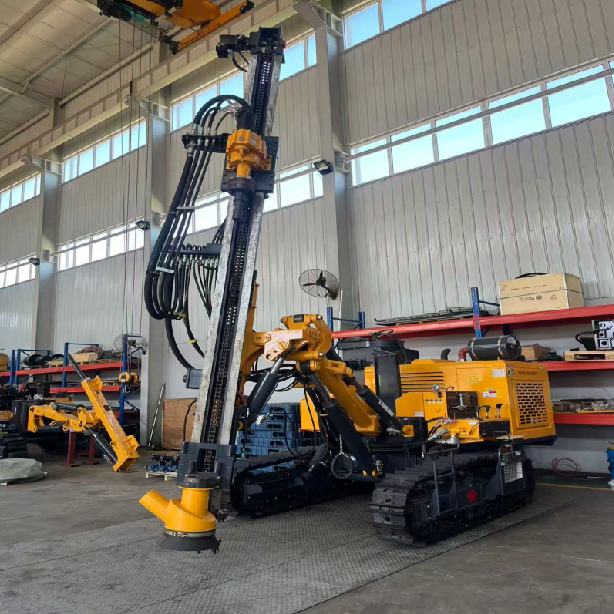
In the realms of mining, construction, geothermal energy development, and water well drilling, the Down-the-Hole (DTH) drilling rig stands as a paragon of efficiency and reliability—especially when tackling hard, abrasive rock formations and deep drilling requirements. Unlike conventional drilling methods, DTH technology delivers direct, high-impact force at the drill bit’s point of contact with the rock, revolutionizing penetration rates and operational precision. This article delves into the core components, working mechanisms, key applications, and technological advancements that make DTH drilling rigs indispensable in modern industrial operations.
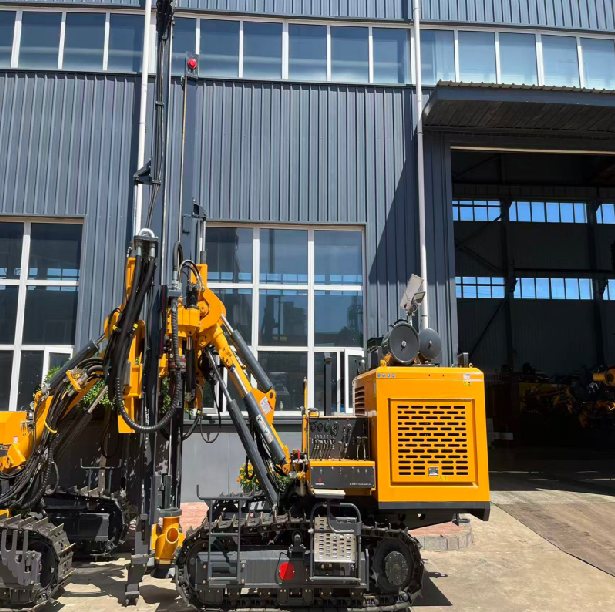
Frame: As the rig’s backbone, the frame is constructed from high-strength steel to support heavy-duty components and maintain stability during operation. It houses all critical systems, from the power source to the drill string, and serves as a foundation for shock absorption during percussion drilling.
Power Source: DTH rigs typically use diesel engines, electric motors, or hydraulic systems to supply energy for drilling and auxiliary functions. High-torque engines are standard in modern models, ensuring consistent performance even in harsh geological conditions.
High-Pressure Compressor: This component is the "heart" of DTH technology, supplying compressed air to drive the downhole hammer. The compressed air not only powers the hammer’s piston but also flushes drill cuttings to the surface, preventing hole clogging and reducing bit wear.
Drill String & Hammer: The drill string consists of connected drill pipes that extend the hammer and bit to target depths. The DTH hammer, positioned directly above the drill bit (at the bottom of the string), delivers high-frequency impacts—powered by compressed air—to pulverize rock. Advanced hammers feature anti-bounce mechanisms that reduce parasitic vibrations by 30% and shock-absorbing chrome carbide linings that extend component life by 150%.
Drill Bit: Specialized button bits with carbide inserts (graded YG11C to YG15C for optimal hardness-toughness balance) are used. Bit configurations vary by formation: convex patterns for medium-hard rock, concave profiles for abrasive environments (reducing wear by 40%), and hybrid layouts for fractured geology.
Control Panel & Safety Systems: Modern rigs feature intuitive control panels that allow operators to adjust drill rotation, feed speed, and air pressure in real time. Ergonomic designs, dust collectors, and emergency shutdown systems enhance operator safety and reduce downtime.
Compressed air is forced down the drill string to the downhole hammer, acting on a piston within the hammer.
The piston delivers rapid, powerful blows directly to the drill bit (frequency ranges from 800 to 1,500 blows per minute in high-performance models), breaking rock through percussion rather than relying solely on rotary force.
Simultaneously, excess compressed air flushes drill cuttings upward and out of the hole, maintaining bit cleanliness and preventing overheating.
The drill string rotates slowly to ensure uniform hole formation, with stabilizers minimizing deviation to within ±1°—critical for precision applications like foundation drilling.
This direct impact mechanism achieves energy transfer efficiencies of 65-75% for pneumatic systems and up to 85% for hydraulic variants—nearly doubling the performance of conventional rotary drilling.
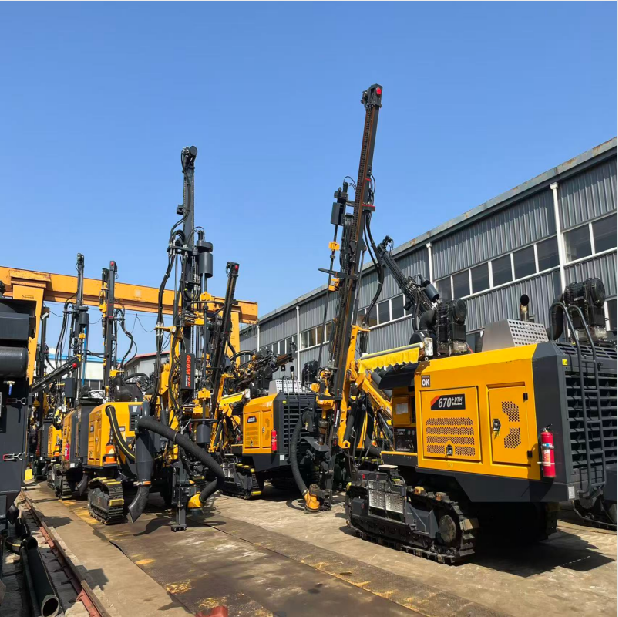
Mining & Exploration: Essential for blast hole drilling, core sampling, and resource extraction in hard rock mines. The rig’s high penetration rate (40-60% faster than top-hammer drilling) reduces operational time for large-scale mining projects.
Quarry Operations: Efficiently drills granite, marble, and limestone for aggregate production. Concave-profile bits minimize wear in abrasive quarry environments, lowering maintenance costs.
Water Well Drilling: A reliable solution for accessing groundwater in rural and urban areas. The rig’s ability to maintain hole straightness ensures consistent well casing installation and long-term water flow.
Construction & Geothermal Energy: Used for pile foundation drilling, soil investigation, and geothermal well construction. Precision alignment and deep-drilling capability make it ideal for geothermal systems that require consistent heat exchange pathways.
Recent innovations have elevated DTH drilling rigs to new levels of efficiency and sustainability: Smart Monitoring Systems: Real-time sensors track bit wear, air pressure, and hole deviation, allowing operators to optimize parameters and reduce downtime. Predictive maintenance algorithms alert technicians to component issues before failures occur.Energy Efficiency: Hydraulic DTH systems reduce fuel consumption by 20-30% compared to traditional pneumatic models, while electric-powered rigs eliminate emissions for indoor or environmentally sensitive projects.Enhanced Durability: Advanced metallurgy, such as heat-treated bit carbides and corrosion-resistant drill pipes, extends component life to 2,500 drilling hours—up from 1,000 hours in older models.Looking ahead, the integration of automation and AI is poised to further transform DTH drilling. Autonomous rigs with remote operation capabilities will improve safety in high-risk environments, while AI-driven geosteering will adapt drilling parameters in real time to changing rock conditions.