
Views: 0 Author: Site Editor Publish Time: 2025-09-29 Origin: Site
Furnace Bottom Feeding Machine: Precision, Efficiency, and Sustainability in Modern Furnace Operations
The furnace bottom feeding machine (FBFM) serves as the "precision supply core" of industrial furnaces, responsible for continuous, uniform delivery of fuel, raw materials, or recycled aggregates to the furnace hearth. Unlike top-feeding systems that face challenges of material segregation and energy loss, FBFM leverages bottom-located delivery mechanisms to align with combustion dynamics and material reaction processes—optimizing efficiency, reducing emissions, and stabilizing furnace conditions across metallurgy, glass manufacturing, and heat treatment sectors. This article dissects its operational principles, equipment classifications, industrial applications, and technological evolution.
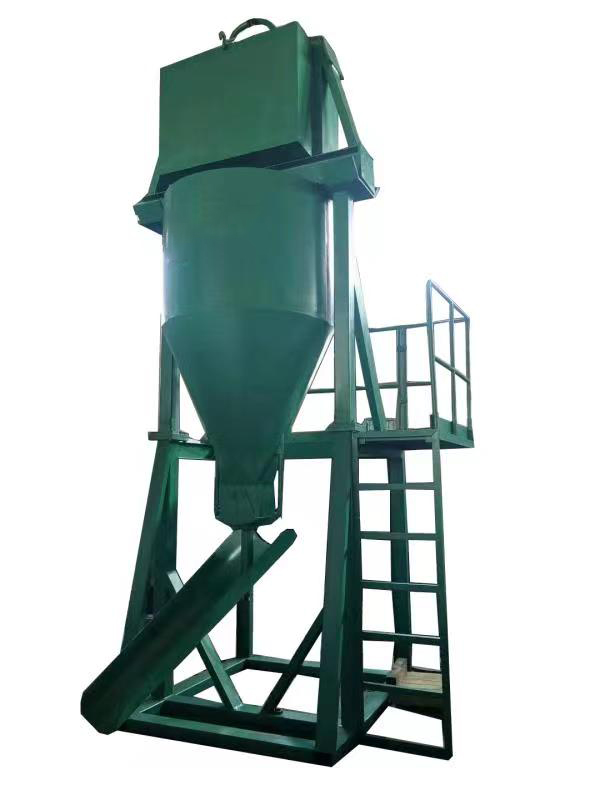
FBFM’s functionality hinges on three interconnected systems: material conveying, flow control, and synchronization with furnace processes. These systems work in tandem to overcome the harsh conditions of high temperatures, dust, and material variability.
A. Fundamental Working Mechanism
Material Storage & Preprocessing: Bulk materials (e.g., coal, iron ore pellets, or glass batch) are stored in hoppers with anti-arch devices (e.g., vibratory motors) to prevent bridging. For cohesive materials like metallurgical dust, pre-screening modules remove agglomerates to ensure consistent flow.
Bottom Conveyance: A driven mechanism (screw, ram, or belt) transfers materials from the hopper to the furnace’s bottom inlet. This bottom-entry design minimizes heat loss compared to top-feeding, as it avoids breaking the furnace’s thermal envelope .
Closed-Loop Control: High-precision load cells measure material weight, while speed sensors monitor conveyor velocity. A PLC system calculates instantaneous feed rate (weight per unit length × conveyor speed) and adjusts motor frequency to correct deviations—maintaining accuracy within ±1% of the set value .
Sealing & Protection: The feed inlet is equipped with double-layer refractory seals and nitrogen purging systems to block high-temperature gas leakage and prevent dust ingress into the conveying mechanism.
B. Key Performance Metrics
Feed Uniformity: Variation coefficient ≤3% to ensure stable combustion or reaction conditions.
Temperature Resistance: Conveyor components (e.g., screw shafts) use heat-resistant alloys (e.g., 310S stainless steel) to withstand hearth-side temperatures up to 1,200°C .
Environmental Compatibility: Dust collection efficiency ≥98% to meet emission standards (e.g., EU Industrial Emissions Directive).
Load Adaptability: Ability to adjust feed rates from 0.5 to 50 t/h to match furnace load fluctuations.
II. Equipment Classifications: Tailored Solutions for Diverse Sectors
A. Screw-Type FBFM: Precision for Fine-Grained Materials
Advantages: High volumetric accuracy, compact structure, and easy integration with dust collection systems.
Case Example: Wright’s 19th-century screw-driven FBFM, powered by furnace draft-induced fan wheels, demonstrated early application in glassworks—supplying fuel proportionally to combustion intensity without external power .
B. Ram-Type FBFM: Durability for Abrasive Materials
Advantages: Resistant to material wear, suitable for high-capacity feeding (up to 100 t/h), and compatible with high-temperature inlets.
Design Innovation: Multi-retort ram systems (3–16 retorts) distribute materials evenly across the furnace bottom, minimizing clinker formation and improving combustion efficiency .
C. Belt-Type FBFM: Flexibility for Variable Loads
Advantages: Low maintenance cost, wide load range, and easy access for cleaning.
Limitation: Requires strict sealing to prevent dust leakage, making it less suitable for ultra-fine powders.
III. Industrial Applications: Driving Efficiency Across Sectors
Rotary Hearth Furnaces (RHF): FBFM feeds iron ore pellets or dust-agglomerated briquettes into the rotating hearth’s bottom layer. In Nippon Steel’s Fastmet process RHF, screw-type FBFM delivers materials at 12 t/h, achieving 94% zinc removal efficiency and 91.9% DRI metalization .
Blast Furnaces: Ram-type FBFM supplies coke and pulverized coal to the furnace hearth, with closed-loop control reducing feed fluctuations by 80% compared to manual feeding—stabilizing coal injection rates and lowering coke consumption by 5–8 kg per ton of steel .
Case Study: Nabertherm’s bottom-loading glass tempering furnaces integrate FBFM with automatic table changing systems. The FBFM maintains batch feed variation <2%, enabling temperature uniformity of ±10°C across the glass sheet .
Automotive Wheel Hub Melting: Dali Daika’s patented FBFM reduces metal scrap drop height by 60% via a descending belt mechanism, cutting dust splashing by 90% and improving workplace air quality .
Stainless Steel Dust Treatment: Inmetco process RHF uses ram-type FBFM to feed nickel-chromium dust briquettes, recovering 96% of valuable metals while minimizing hazardous emissions .
IV. Technological Evolution: Toward Smart, Sustainable Feeding
A. Digitalization & Smart Control
IoT-Enabled Monitoring: Sensors track conveyor wear, material flow rate, and seal integrity, transmitting data to cloud platforms (e.g., InteCast ERP) for predictive maintenance. This reduces unplanned downtime by 35% .
AI-Powered Adaptation: Machine learning algorithms analyze historical feed rate data and furnace temperature profiles to predict optimal feed parameters. In China’s Laiwu Steel RHF, this technology improved metalization rate by 3% .
Dust-Free Design: Enclosed conveying casings with negative-pressure dust collection systems reduce particulate emissions to <10 mg/m³—meeting China’s GB 28662-2012 and EU BS EN 16429 standards.
Energy Recovery: Heat exchangers integrated into the FBFM’s seal system capture waste heat from furnace gas, preheating incoming materials by 50–80°C and reducing fuel consumption by 4–6% .
High-Temperature Adaptation: New ceramic-coated screws and silicon carbide (SiC) conveyor linings extend equipment life in 1,400°C environments (e.g., quartz glass tempering furnaces) by 2–3 times .
Sticky Material Handling: Vibratory screw conveyors with Teflon coatings prevent adhesion of high-moisture materials (e.g., iron ore concentrate), reducing blockages by 90% .
V. Conclusion


